Steel vs other materials · 5 min read
Termites, humidity and salt air: why steel frames suit Thai islands
Island weather is hard on buildings. Termites live in the soil, the air is humid most of the year, and near the beach it carries salt. A structural frame has to stand up to all three for decades. Here is how a light gauge steel frame does it.
APEX LGS ENGINEERING TEAM · 29 OCTOBER 2026
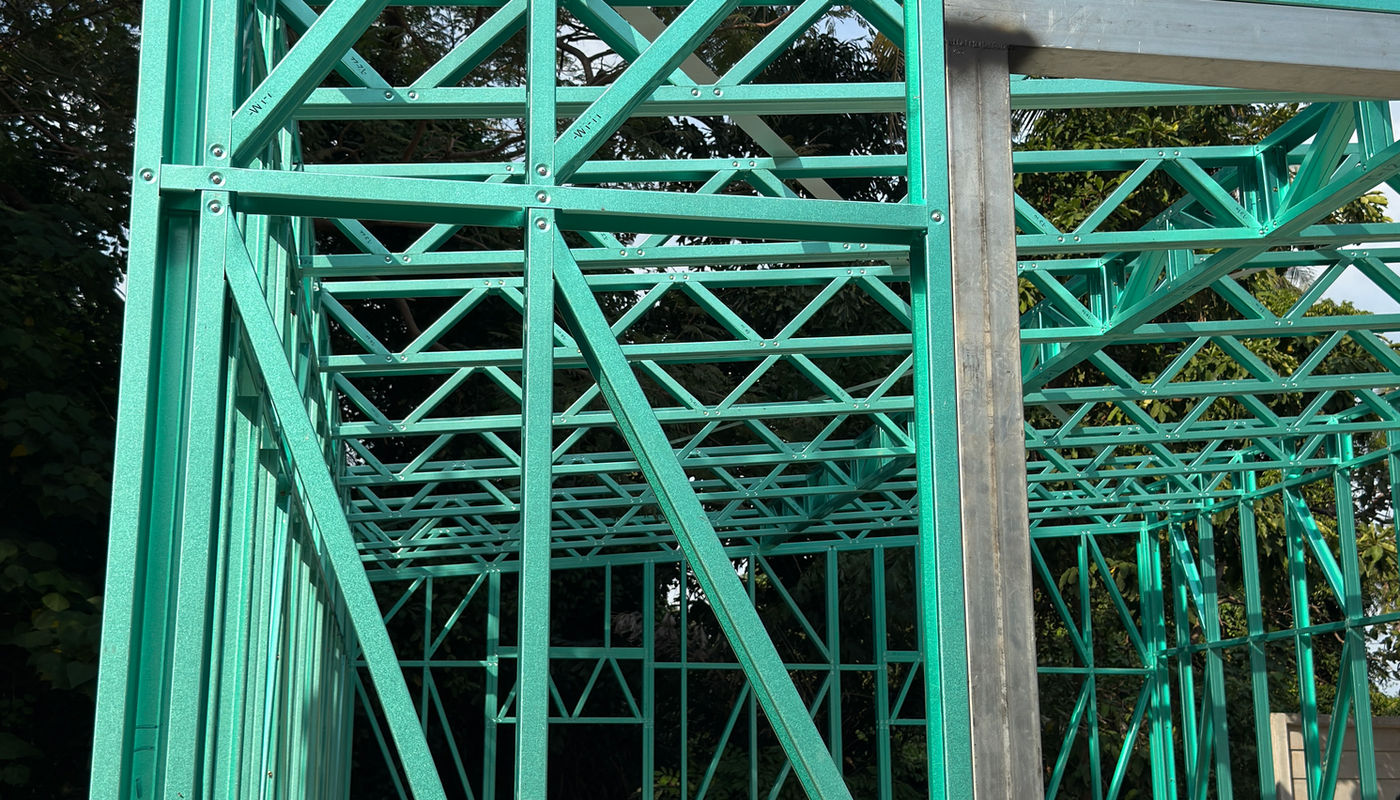
Termites: nothing to eat
Termites eat cellulose, the material in wood. A light gauge steel frame has none. Steel is inorganic, so termites can't damage the studs, trusses or bracing that carry your house.
That has a second benefit. Timber frames usually need chemical treatment of the soil and the wood before building. A steel frame needs no termite treatment for the structure, so there is less chemical work on your land.
Humidity: no rot, no warping
Timber takes up moisture from humid air. It swells, shrinks, twists and, if it stays wet, rots. Steel does not absorb water. A stud that is straight in the factory stays straight in the wall, which keeps walls plumb and finishes from cracking.
Our studs are roll-formed to a tolerance of about 1 mm. Straight framing means less plaster and render to hide uneven walls later.
Salt air: the coating does the work
Near the sea, the risk to steel is corrosion. That is why the coating matters as much as the steel. We specify G550 steel with a ZM275 coating: zinc, aluminium and magnesium, 275 g/m² across both faces. Magnesium makes the coating more resistant than plain zinc and helps protect cut edges.
The frame also sits inside the wall, not outside it. Cladding, a ventilated gap and a breathable membrane keep rain and sun off the steel.
Condensation: designed out
In an air-conditioned villa, warm humid air outside meets cool air inside. The wall build-up is designed so moisture can escape outward rather than collect on the frame: a breathable membrane outside, a ventilated cavity behind the cladding, and insulation inside the wall.
Standards behind the frame
- Steel and coating to AS 1397, from mills certified to Thai industrial standards (TIS, มอก.).
- Frames designed to AS/NZS 4600, the standard for cold-formed steel structures.
- Every design checked and signed by a licensed Thai structural engineer for the building permit.
What this means for your villa
APEX engineers, roll-forms and erects the steel frame and roof trusses. Your builder then closes and finishes the house. The result looks like any other villa from the outside, with a structure that does not feed termites, rot in the humidity or warp out of line.
Send your plans, get a frame estimate in 6 hours.
Drawings, a sketch or a short brief is enough. Request an estimate or message us on WhatsApp.
Frequently asked questions
Do I still need termite treatment with a steel frame?
Not for the structural frame, which is steel. Timber you add later, such as doors, cabinets or decking, should be protected as usual.
Will the frame rust near the beach?
The frame carries a ZM275 zinc-aluminium-magnesium coating made for coastal sites, and it is enclosed inside the wall behind cladding and a membrane.